Key Words
APS- Automated Passenger Service
ASDE- Authorised self driving entity. The organisation responsible for how an automated vehicle drives when its self driving system is engaged.
Product Liability- Legal responsibility for injury or damage caused by defective product.
What’s Happening?
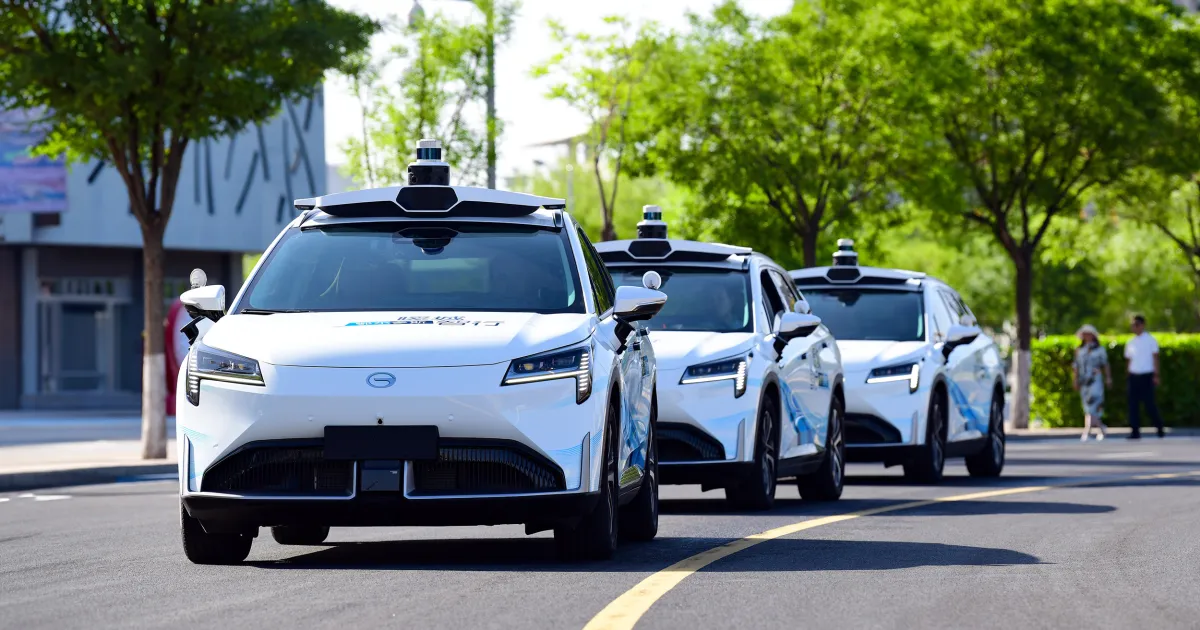
London is moving closer towards the introduction of robotaxis, with several major technology and transport companies seeking to operate automated passenger services in the capital.
Waymo, owned by Alphabet, has begun autonomous driving in London with trained specialists behind the wheel and intends eventually to launch a fully autonomous ride-hailing service. Uber and UK autonomous-driving company Wayve are also developing robotaxi services. In August 2026, TfL approved a supervised Uber-Wayve trial involving up to 15 vehicles for one year, although licensed private-hire drivers will initially remain behind the wheel.
The Government has also opened applications for automated passenger service pilots across Great Britain. Businesses wanting to operate a driverless passenger service in London need an APS permit from the DVSA, and importantly, the DVSA cannot grant a London permit without TfL’s consent.
This means London is likely to become an important testing ground for autonomous vehicles. However, London’s roads create a particularly difficult environment. Robotaxis need to deal with narrow streets, cyclists, pedestrians, buses, roadworks, emergency vehicles and extremely heavy traffic.
The technology could provide major benefits. Autonomous vehicles do not become tired, distracted or intoxicated and could potentially reduce accidents caused by human error. They could also improve transport accessibility for people who cannot drive and potentially make taxi services cheaper over time.
However, introducing robotaxis raises important legal and commercial questions.
One concern is what happens when the technology fails. In December 2025, a major power outage in San Francisco caused traffic lights to stop working and resulted in several Waymo robotaxis becoming stuck at intersections, contributing to congestion. Waymo subsequently announced software and emergency-response improvements.
Another major question is liability. If a robotaxi crashes, there may no longer be a human driver to blame. Responsibility could instead involve the software developer, vehicle manufacturer, robotaxi operator, maintenance provider or insurer.
The UK has therefore introduced the Automated Vehicles Act 2024, creating a new regulatory framework that places responsibility on companies involved in providing and operating self-driving technology rather than simply treating the passenger as the driver.
The Legal Issues
Liability
Under the Automated Vehicles Act 2024, an authorised automated vehicle must have an Authorised Self-Driving Entity (ASDE). This organisation is responsible for how the vehicle behaves while the automated driving system is operating.
Fully autonomous vehicles operating without a responsible person inside must also have a licensed no-user-in-charge operator responsible for areas such as maintenance, insurance and operational oversight.
In pre-automated era the liability of an incident would usually be placed on either or both drivers, making the situation a lot simpler. However, when there is an incident with a robotaxi this could point to a wide variety of errors such as: a buggy software update, faulty hardware, cybersecurity or even incorrect intervention from a remote operator.
This opens up a plethora of risks for companies such as Waymo go beyond just human negligence.
Product Liability
Robotaxis also blur the line between technology and traditional motor vehicles.
Imagine a Waymo vehicle crashes because a sensor manufactured by another company incorrectly identifies a pedestrian.
There could potentially be claims against several parties.
The autonomous-driving company may argue that the hardware was defective, while the sensor manufacturer may argue that the software interpreted its information incorrectly.
Contracts between these companies therefore become extremely important because they need to establish who bears the financial risk when technology fails.
Data Protection and Privacy
Robotaxis need enormous amounts of data to operate.
Vehicles may continuously collect information through cameras, GPS and sensors, potentially recording:
Passengers
Pedestrians
Other vehicles
Number plates
Journey history
Location data
Pick-up and drop-off locations
This creates issues under the UK GDPR and Data Protection Act 2018.
The ICO states that organisations using vehicle surveillance involving identifiable individuals must consider data protection requirements, including establishing a lawful basis for processing and protecting people’s privacy. Connected and autonomous vehicles are also specifically identified by the ICO as technologies that can create sufficient privacy risks to require a Data Protection Impact Assessment (DPIA).
Companies will therefore need to consider questions such as:
How much information should the vehicle collect?
How long should recordings be kept?
Can driving data be used to train future AI systems?
Can passenger journey data be shared with another Alphabet company?
Regulation and Licensing
Robotaxi companies cannot simply deploy thousands of cars onto London’s roads.
They need to operate within the emerging automated vehicle regulatory system.
For London services, the DVSA is responsible for APS permits, but TfL’s consent is required. TfL can therefore consider the effect a proposed service could have on London’s transport network before approving it.
The UK also needs regulation that is strict enough to maintain public confidence without becoming so restrictive that autonomous vehicle companies choose to develop the technology elsewhere.
Why This Matters For Lawyers
Regulatory Landscape
Tech companies wanting to enter this market will require extensive regulatory advice, especially in such a regulated environment such as the UK.
For companies such as Waymo that operate internationally they will need to compare different regulatory systems to find one that aligns with the company’s future perspectives.
Contracts And Risk Allocation
A robotaxi will have many moving parts, such as the company such as Jaguar providing the vehicles, a maintenance company, insurer, hardware manufacturer, cloud provider and so on.
Lawyers therefore must draft indemnity contracts warranties and limitations of liabilities.
Competition
Competition lawyers may also become involved if a small number of large technology companies eventually control the robotaxi market.
Companies such as Alphabet, Uber and other major platforms already possess significant technology, data and financial resources.
Regulators may therefore examine whether dominant businesses are:
Restricting competitors’ access to technology or infrastructure
Using data advantages to exclude smaller competitors
Acquiring emerging autonomous-driving competitors
Entering anti-competitive agreements
As the market develops, merger control and antitrust law could therefore become increasingly important.
Investment and Transactions
Autonomous driving would require huge investments in AI development, vehicles, sensors, charging infrastructure and so on. This would mean that we could see an increased amount of:
Joint ventures
Mergers and acquisitions
Venture capital investment
Debt financing
Infrastructure agreements